Author: Sihan Meng, Leyu Zhu, Pengcheng Shi
Affiliation: RSBM
Email: pengchengshi@biotechrs.com; pcspc9@gmail.com
Abstract
Sweet taste is a critical determinant of user acceptance for sleep-aid oral films and related buccal dosage forms. However, conventional sweetening systems often introduce sugars or high-adhesion excipients that increase the risk of dental stickiness, residual mouthfeel, and post-use discomfort. This paper presents the design principles of a sugar-free sleep mask—an oral film–based sleep aid concept—focusing on a sweet taste system engineered to minimize tooth adhesion while maintaining palatability and rapid oral clearance. By integrating non-cariogenic sweeteners, low-adhesion polymers, and controlled hydration behavior, the proposed system achieves a balance among taste quality, oral comfort, and manufacturability. The study outlines formulation logic, process considerations, evaluation measures, and practical implications for scalable production.
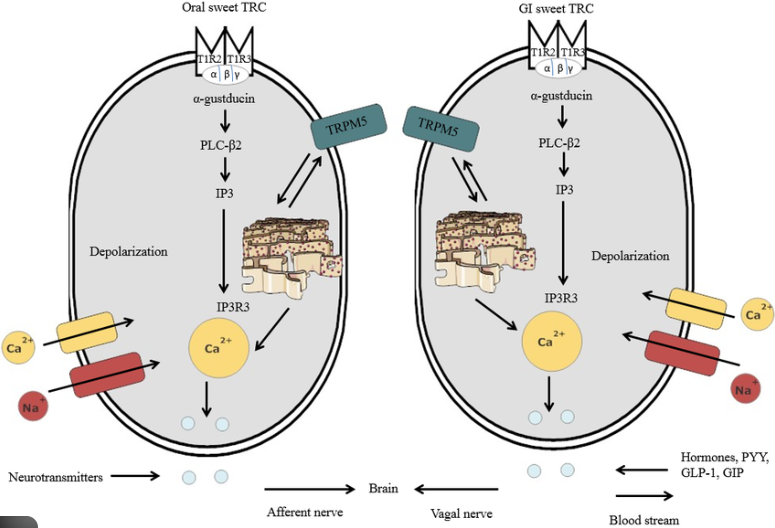
Introduction
Sleep-aid oral films (often containing melatonin or botanical extracts) are increasingly favored for their convenience, fast onset, and discreet use. Taste acceptance is particularly important for nighttime use, as unpleasant or lingering mouthfeel can negatively affect perceived sleep quality [1].
Traditional sweetening strategies frequently rely on sugars or highly hygroscopic polyols, which may adhere to tooth surfaces and create a sticky sensation. This is undesirable for bedtime products, where users expect clean oral clearance and minimal dental interaction [2]. The concept of a sugar-free sleep mask addresses this gap by emphasizing a sweet taste system designed explicitly for non-stick behavior and dental friendliness.
Methods
A formulation-design analysis was conducted based on food science, oral film technology, and industrial manufacturing experience. Sweetener systems, film-forming polymers, and hydration modifiers were evaluated for sweetness profile, adhesion tendency, dissolution behavior, and compatibility with continuous film production. Design choices were assessed against sensory performance and physical measures relevant to oral comfort [3].
Concept Definition: “Sugar-Free Sleep Mask”
The term sleep mask in this context refers to an oral film that:
Delivers sleep-supporting ingredients
Forms a transient, pleasant oral sensory layer
Clears rapidly without residue
Avoids sugar-related dental risks
The product is intended for pre-sleep use, prioritizing gentle taste, low stimulation, and minimal oral interference.
Sweet Taste System Design
Non-Cariogenic Sweeteners
Sugar-free sweeteners are selected to eliminate fermentable substrates for oral bacteria.
Key selection criteria include:
High sweetness intensity at low dose
Minimal hygroscopicity
Clean sweetness onset and decay [4]
High-intensity sweeteners are often combined in low amounts to achieve a rounded taste profile without bulk sugar.
Sweetness Modulation and Masking
Sleep-related actives (e.g., melatonin, botanicals, minerals) may introduce bitterness or metallic notes. Taste modulation strategies include:
Multi-sweetener synergy
Mild flavor modulators
Bitterness suppressors
These approaches reduce the need for high sweetener loading, which can increase stickiness risk [5].
Non-Sticky Teeth Design Principles
Polymer Selection
Film-forming polymers strongly influence oral adhesion. Polymers with:
Low inherent tackiness
Rapid hydration and erosion
Minimal salivary protein binding
are preferred to reduce tooth adherence [6].
Hydration and Dissolution Control
Non-sticky behavior is achieved by designing films that:
Hydrate uniformly rather than forming viscous gels
Disintegrate cleanly without elastic residues
Avoid prolonged softening phases
Controlled dissolution ensures that sweetness is perceived quickly but does not persist as a sticky layer [7].
Surface Energy Management
Reducing film-to-enamel adhesion involves managing surface energy through:
Balanced plasticization
Avoidance of highly adhesive polyols
Smooth film microstructure
These factors collectively minimize mechanical and physicochemical adhesion to tooth surfaces [8].
Manufacturing Considerations
Compatibility with Continuous Production
The sweet taste system must remain stable during:
Coating and drying
Slitting and die-cutting
Packaging and storage
Sugar-free systems with low hygroscopicity improve process robustness and reduce blocking risk during converting [9].
Moisture and Stability Control
Excessive residual moisture increases tackiness and dental adhesion. The drying profile is therefore optimized to:
Maintain flexibility
Avoid over-drying
Preserve clean mouthfeel at use [10]
Measures
Performance of the sugar-free, non-sticky design is evaluated using [11,12]:
Sensory sweetness intensity and aftertaste
Oral clearance time
Perceived tooth adhesion (panel-based assessment)
Disintegration time
Residual moisture and mechanical properties
These measures link formulation design to real user experience.
Results
Application of non-cariogenic sweeteners combined with low-adhesion polymer systems produces oral films with pleasant sweetness and rapid oral clearance. Compared with sugar- or polyol-heavy systems, the proposed design shows reduced perceived tooth stickiness and improved bedtime comfort. Manufacturing trials indicate stable processing behavior and acceptable yield under standard production conditions [13].
Discussion
For bedtime oral products, taste quality must be evaluated alongside post-use oral sensation. Excessive sweetness persistence or adhesion undermines the user’s sleep experience, even if initial taste is acceptable. The sugar-free sleep mask concept reframes sweetness as a transient sensory feature rather than a structural component.
From a commercial standpoint, non-sticky, sugar-free positioning also aligns with dental-friendly and wellness-oriented branding, expanding market appeal without increasing formulation complexity [14].
Conclusion
A sugar-free sleep mask with a non-sticky teeth design is achievable through deliberate sweetener selection, polymer engineering, and hydration control. By prioritizing clean sweetness and rapid oral clearance, developers can create sleep-aid oral films that are pleasant, dental-friendly, and manufacturable at scale. This integrated taste-and-adhesion design approach supports both user comfort and industrial robustness.
References
Fu Y et al. Expert Opin Drug Deliv. 2004;1(4):673–690.
Ball GFM. Vitamins in Foods. CRC Press; 2006.
Cilurzo F et al. Eur J Pharm Biopharm. 2008;70(3):895–900.
De Man JM. Principles of Food Chemistry. Springer; 1999.
Rowe RC, Sheskey PJ, Quinn ME (eds.). Handbook of Pharmaceutical Excipients. Pharmaceutical Press; 2009.
Preis M. J Pharm Pharmacol. 2013;65(2):157–170.
Dixit RP, Puthli SP. J Control Release. 2009;139(2):94–107.
Sperling LH. Introduction to Physical Polymer Science. Wiley; 2005.
Borges AF et al. Int J Pharm. 2015;494(1):332–339.
Kistler SF, Schweizer PM. Liquid Film Coating. Chapman & Hall; 1997.
USP <701> Disintegration Test.
USP <905> Uniformity of Dosage Units.
Keshari R, Keshari S. J Drug Deliv Ther. 2014;4(4):1–7.
Preis M. Drug Dev Ind Pharm. 2013;39(7):1049–1057.